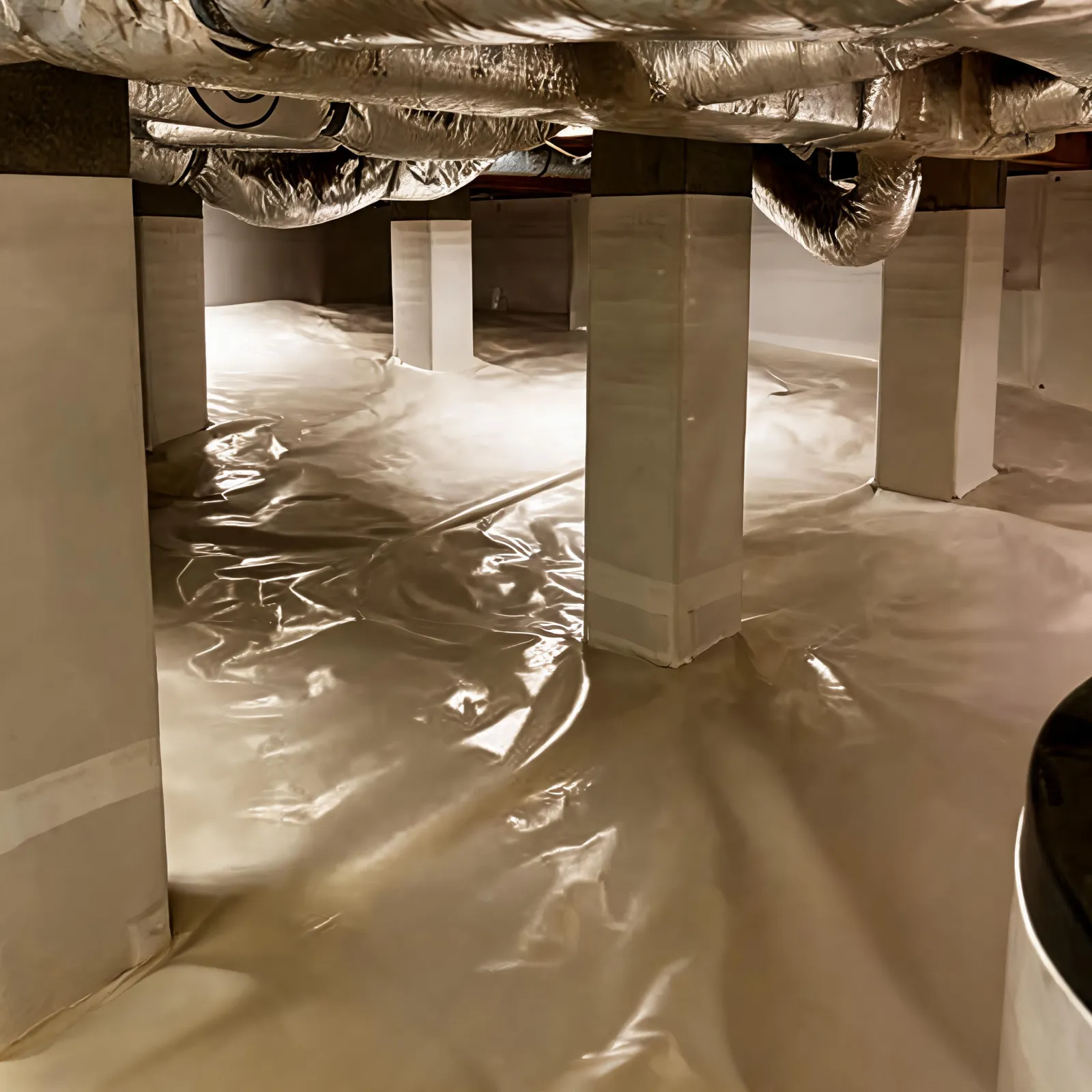
Crawl Space Encapsulation & Vapor Barriers
Crawl Space Encapsulation & Vapor Barriers in Augusta, GA
Warm, wet Augusta weather meets the space under a house. Crawl space encapsulation can keep ground moisture out.
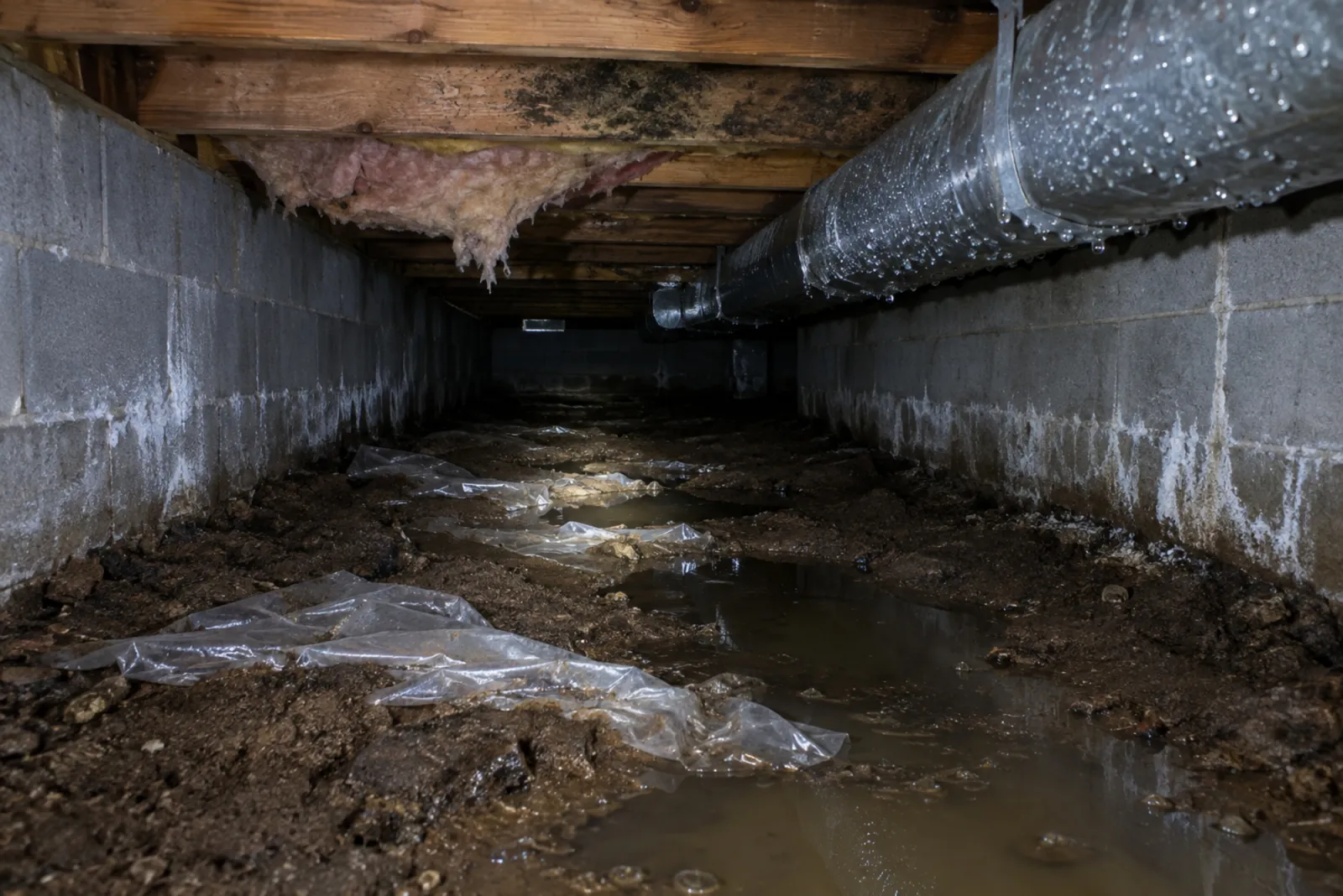
Damp Air Under a House: What You May Notice
These are things a homeowner can see or smell before asking about crawl space encapsulation. Each can point to moisture under the house, but only an inspection confirms the cause.
- A musty smell in the rooms or at the floor vents. Damp air from under the house may be rising into the living space.
- Beads of water on ducts, pipes or the underside of the floor. Moist air may be meeting cooler surfaces.
- Mold or mildew on joists or the subfloor. Wood that stays damp can grow it. A mold test is separate from an inspection of the moisture source.
- Soft, spongy or sagging floors. Wood that stays wet may be weakening. A foundation inspection looks at the framing.
- Standing water or wet soil under the house after rain. Water may be entering from outside. See drainage and water control.
- Plastic sheeting that is torn, bunched or missing. An old cover may no longer block ground moisture.
- Wet or fallen insulation between the joists. It may have absorbed moisture from the air or the soil.
Crawl Space Encapsulation in Augusta, GA: Barrier, Sealing or Water Control
Crawl space encapsulation in Augusta, GA, is a set of steps, not one product. A vapor barrier is the smallest step, and the right mix depends on where the moisture comes from.
| Option | What it does | Fits when | Limits |
|---|---|---|---|
| Ground vapor barrier | A heavy plastic sheet over the soil that blocks moisture rising from the ground | The soil is damp but the space has no standing water | Does not seal the walls or vents, so outside air still comes in |
| Full encapsulation | The sheet runs up the walls, seams are sealed and vents are closed, making the space part of the house air | Damp air and musty smells are the main problem | Needs a dry space first. Costs more than a ground sheet alone |
| Dehumidifier added | A machine that pulls moisture out of the sealed air | The air stays damp after the space is sealed | Needs power and upkeep, and a drain or pump for the water it collects |
| Drainage or sump pump first | Moves water away from the house or pumps it out of the space | Water stands in the space after rain | Handles liquid water, not damp air. See sump pumps and interior drainage |
| Insulation and wood repair | Replaces wet insulation and fixes damaged framing | Insulation has fallen or wood is soft | Does not stop the moisture by itself |
How a Crawl Space Job Usually Goes
- Look at the space. A contractor goes under the house and checks the soil, the walls, the vents, the insulation and the wood for moisture or damage.
- Find where the water comes from. Roof water, soil water and damp air each need a different fix. The contractor checks which ones apply.
- Fix water and damage first. You get a written plan. Drainage, a pump or wood repair may come before any sheeting goes down.
- Install the barrier and seal. The work is performed by licensed and insured contractors. They clean the space, lay the sheet, seal seams and walls and close vents if the plan calls for it.
- Check the space after rain. Look under the house or ask for a recheck after the next hard rain. Tell the contractor if it still feels damp.
What Moves the Price of Sealing a Crawl Space
Crawl space encapsulation is priced by the job. These things move the price:
- How large the crawl space is
- How much clearing or cleaning it needs first
- How easy it is to crawl in and reach every corner
- Whether it holds standing water or needs a pump or drain
- How much of the walls and how many vents must be sealed
- Whether a dehumidifier and power are needed
- Whether wet insulation, mold or damaged wood must be dealt with
For wider context, read about crawl space encapsulation cost in Augusta, or ask for a free estimate.
Wet Weather and Warm Summers Around Augusta
- NOAA climate normals. The 1991-2020 normals for Augusta Bush Field (downloaded October 6, 2026) show 44.09 inches of rain a year and 107.3 days with at least 0.01 inch. They also show 86.3 days a year at or above 90F. The gauge is one site, not every town.
- A news report of crawlspace flooding. WRDW reported on July 23, 2025, from the Overton Road and Raes Creek area. One homeowner described water rising several feet into garages and crawlspaces. That is one resident's account, not a survey.
- Hurricane Helene. The National Weather Service September 2024 summary (dated October 28, 2024) shows 6.45 inches of rain at Bush Field that month, against a 3.60 inch normal.
- Soil survey, Richmond County. An NRCS soil survey sample of 25 land points (queried October 6, 2026) shows 6 on frequently flooded floodplain soils. NRCS says the Bibb series has a water table within 8 inches of the surface for 6 to 11 months a year.
Census data does not record foundation type, so these figures say nothing about how many homes have a crawl space.
Crawl Space Encapsulation & Vapor Barriers Questions in Augusta, GA
How do I know if my Augusta house has a crawl space?
Look for small vents or an access door in the foundation wall, or a hatch in a closet floor. Some houses sit on a slab instead. Census data does not record foundation type, so an inspection is the way to tell.
Is a vapor barrier enough, or do I need full crawl space encapsulation?
A ground barrier covers the soil only. Full crawl space encapsulation also seals the walls and seams and closes the vents. Which one fits depends on where the moisture comes from, and an inspection shows that.
Will I still need a dehumidifier after crawl space encapsulation?
Maybe. Sealing cuts moisture from the soil and outside air, but the air under the house can still hold some. A licensed and insured contractor will look it over and give you a free estimate.
Will sealing stop water that floods in after a heavy rain?
No. Sheeting blocks moisture from the soil, not liquid water. A July 2025 WRDW report quotes one homeowner describing water entering crawlspaces, so standing water calls for drainage or a pump.
Do hot, wet summers in Augusta matter for crawl space encapsulation?
They may. NOAA normals show 86.3 days a year at or above 90F and 107.3 days with measurable rain. Warm moist air can condense on cooler surfaces under a house, but only an inspection shows if that is happening to yours.
Contact Us Today for a Free Estimate
Dampness under a house is worth having inspected before you plan crawl space encapsulation. The work is performed by licensed and insured contractors. Call or ask online for a free estimate.