Sump Pumps & Interior Drainage
Sump Pumps & Interior Drainage in Augusta, GA
When storms overload Augusta drains, water can collect under a house. A sump pump and interior drain collect it and pump it out.
Where Water Collects: Signs Under the Floor
These are things a homeowner can see. Each one can mean water is reaching or collecting under the house, but only an inspection confirms the cause.
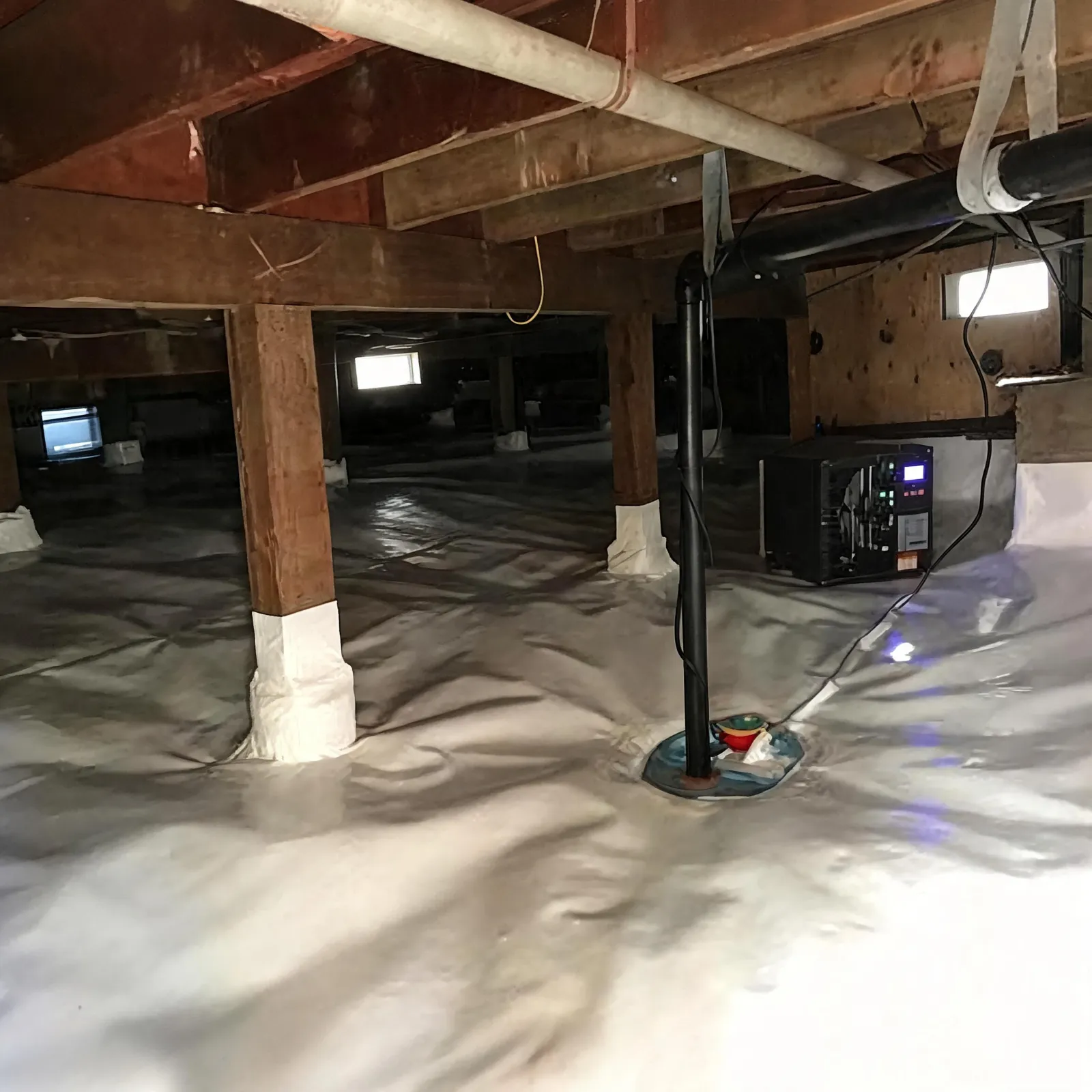
- Standing water or wet soil in a crawl space after rain. Water may be entering at the wall or collecting at a low spot. See crawl space encapsulation and vapor barriers for the moisture side.
- A wet garage or slab floor, especially along the walls. Water may be coming up at the edge of the slab or through a joint.
- A musty smell that gets worse after a storm. Damp air can come from water that collects and does not leave.
- White powder or dark stains on a masonry wall or the floor edge. Moisture may be passing through the material.
- Rust on metal, soft wood or sagging insulation under the floor. The space may stay damp for long stretches.
- A pump that runs often, runs loudly or does not shut off. The pump may be failing, stuck or too small for the water it gets.
- Water in the pit that never drains out. The discharge line may be blocked or leading nowhere useful.
Cracks or sticking doors can have other causes. A foundation inspection looks at the whole picture.
Sump Pump Installation in Augusta, GA: Pumps, Drains and Outlets
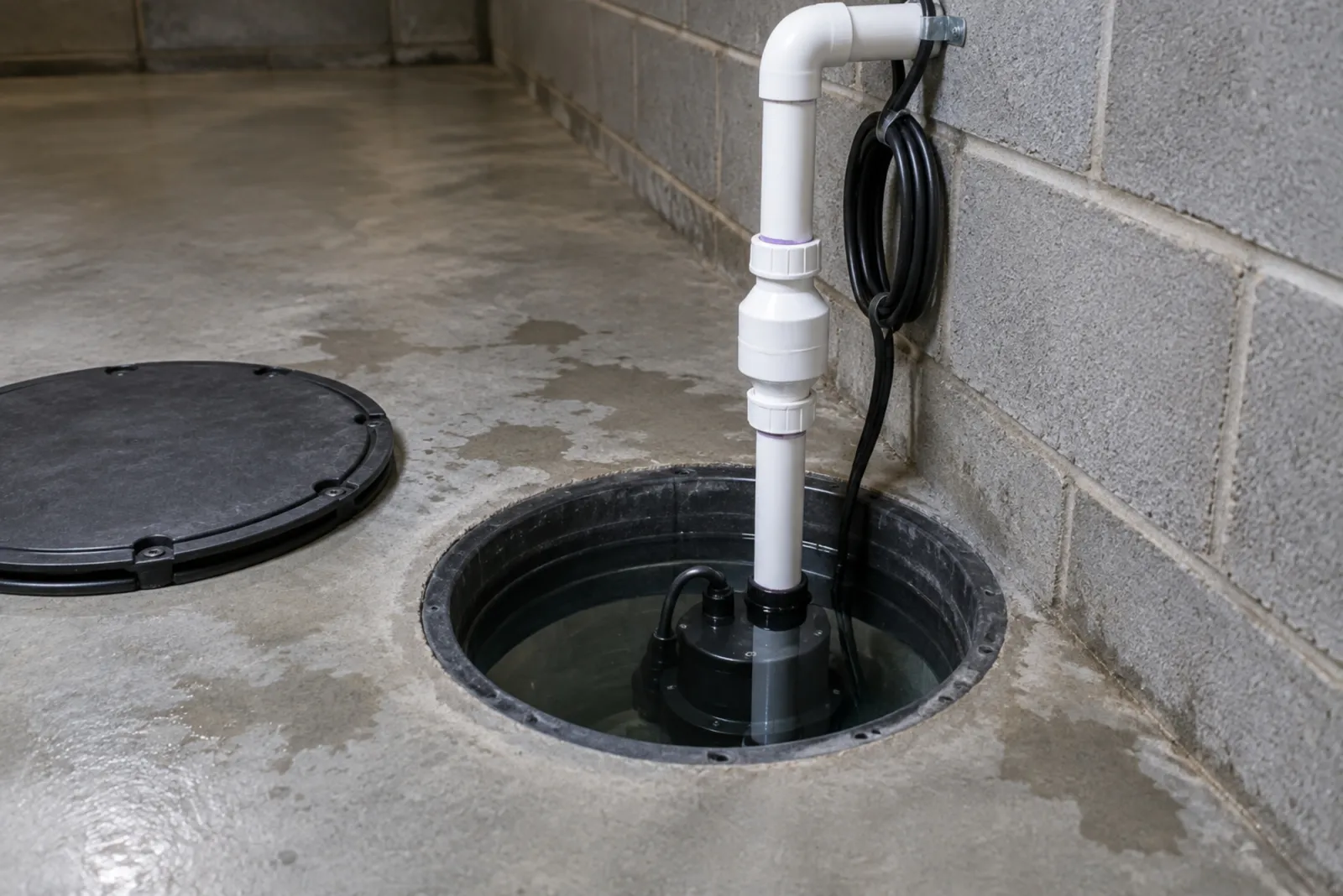
Sump pump installation in Augusta, GA, is one part of a system. The pit, the pump, the drain that feeds it and the discharge line each do a different job.
| Piece | What it does | Fits when | Limits |
|---|---|---|---|
| Submersible pump in a pit | Sits in a lined pit below the floor and pushes water out through a pipe | Water collects at a low point under the house | Needs power, a clear pit and a working float switch |
| Pedestal pump | The motor sits above the pit and a pipe reaches down into it | The pit is shallow and easy to reach | Louder, and the motor is exposed to damp air |
| Interior drain | A pipe set along the inside of the wall or footing that guides water to the pit | Water seeps in along a wall or the edge of a slab | Treats water that has already arrived. It does not stop water outside the wall |
| Backup power or backup pump | Runs a second pump from a battery, or adds a second pump | The pump must keep working when the power is off or the first pump fails | Batteries wear out and need testing |
| Discharge line with check valve | Carries pumped water outside and stops it from running back into the pit | Every pump system | Needs a lower outlet. See drainage and water control for moving water across the lot |
How a Sump Pump Job Usually Goes
- Find where the water enters. A contractor looks at the low spots, the walls, the slab edge and the outside ground, then checks any pump already there.
- Check where the water can go. A pump only moves water. For any sump pump installation the contractor looks for a safe outlet away from the house and from the neighbor's lot.
- Plan the sump pump installation. You get a written plan. It may include a pit, one or two pumps, an interior drain, a backup and the discharge line.
- Do the sump pump installation. The work is performed by licensed and insured contractors. They set the pit, lay the drain, connect the pump and the discharge pipe, and close up the floor or ground.
- Test it in real rain. The contractor tests the float and the pump before the sump pump installation is finished. Watch it in the next storm, and tell the contractor if water still collects.
What Changes the Price of Sump Pump Installation
Sump pump installation is priced by the job. These things move the price:
- How many pumps and pits the house needs
- Whether the floor is concrete that must be cut, or open soil in a crawl space
- How long the interior drain run is
- How far the discharge line must run and where the water ends up
- Whether a battery backup or a second pump is added
- How easy it is to reach the work area, including tight crawl spaces
- What must be restored afterward, such as concrete, liner or flooring
- Whether outside drainage work is needed to go with the pump
Ask for a free estimate and a contractor can price your house.
Creeks, Storm Drains and Wet Ground Around Augusta
- News report, July 2025. WRDW reported on July 23, 2025, from the Overton Road and Raes Creek area. It quotes the head of Augusta's engineering department saying clogged and aging storm drains cannot handle the flow. One homeowner described water rising into garages and crawlspaces. That is one resident's account, not a survey.
- Soil survey, Richmond County. The NRCS soil survey sample (queried October 6, 2026) shows 6 of 25 land points on frequently flooded floodplain soils. NRCS says the Bibb soil series has a water table within 8 inches of the surface for 6 to 11 months a year. It says the Chewacla series has a seasonal high water table from November to April.
- Soil survey, Hephzibah. A sample of 30 points in the Hephzibah area (queried October 6, 2026) shows 5 poorly drained points, 4 of them rated frequently flooded. A point is not a lot, so this says nothing about one house.
- Hurricane Helene, September 2024. The National Weather Service summary shows 6.45 inches of rain at Bush Field in September 2024, against a 3.60 inch normal. It reports Richmond County rainfall of 4.29 to 12.02 inches from Helene and the rain before it.
Sump Pump Questions in Augusta, GA
Can sump pump installation work in a crawl space or garage, not just a basement?
A pump sits in a pit set below the lowest floor or the crawl space ground, so the room does not have to be a basement. The pit must be lower than the water it collects. A licensed and insured contractor will look it over and give you a free estimate.
Where does the water go after sump pump installation?
Once the pump runs, water leaves through a discharge pipe. The pipe ends at an outlet away from the house, such as a lower part of the lot or a drain system. If the water has nowhere lower to go, it can run back toward the house.
Is an interior drain the same as a French drain?
An interior drain sits inside and guides water to the pit. A French drain sits outside in the ground and carries soil water to an outlet. Some houses need both.
Will a sump pump keep floodwater out if my area floods?
A pump handles water that collects in the pit and cannot hold back rising floodwater. The soil survey shows frequently flooded creek and river bottoms in Richmond County, and the city's Planning and Development office handles flood permit applications and elevation certificates.
What happens to a sump pump when the power goes out?
A standard pump stops, because it runs on house power. A battery backup or a second pump can keep running. Ask the contractor what backup fits your sump pump installation and how often to test it.
Contact Us Today for a Free Estimate
Water that collects under a house is worth having inspected. Sump pump installation is one fix, and the work is performed by licensed and insured contractors. Call or ask online for a free estimate.