Concrete Leveling & Polyjacking
Concrete Leveling & Polyjacking in Augusta, GA
Concrete leveling can lift a sunken driveway, patio or garage floor that traps water or trips people.
Sunken Slabs, Trip Edges and Gaps You Can See
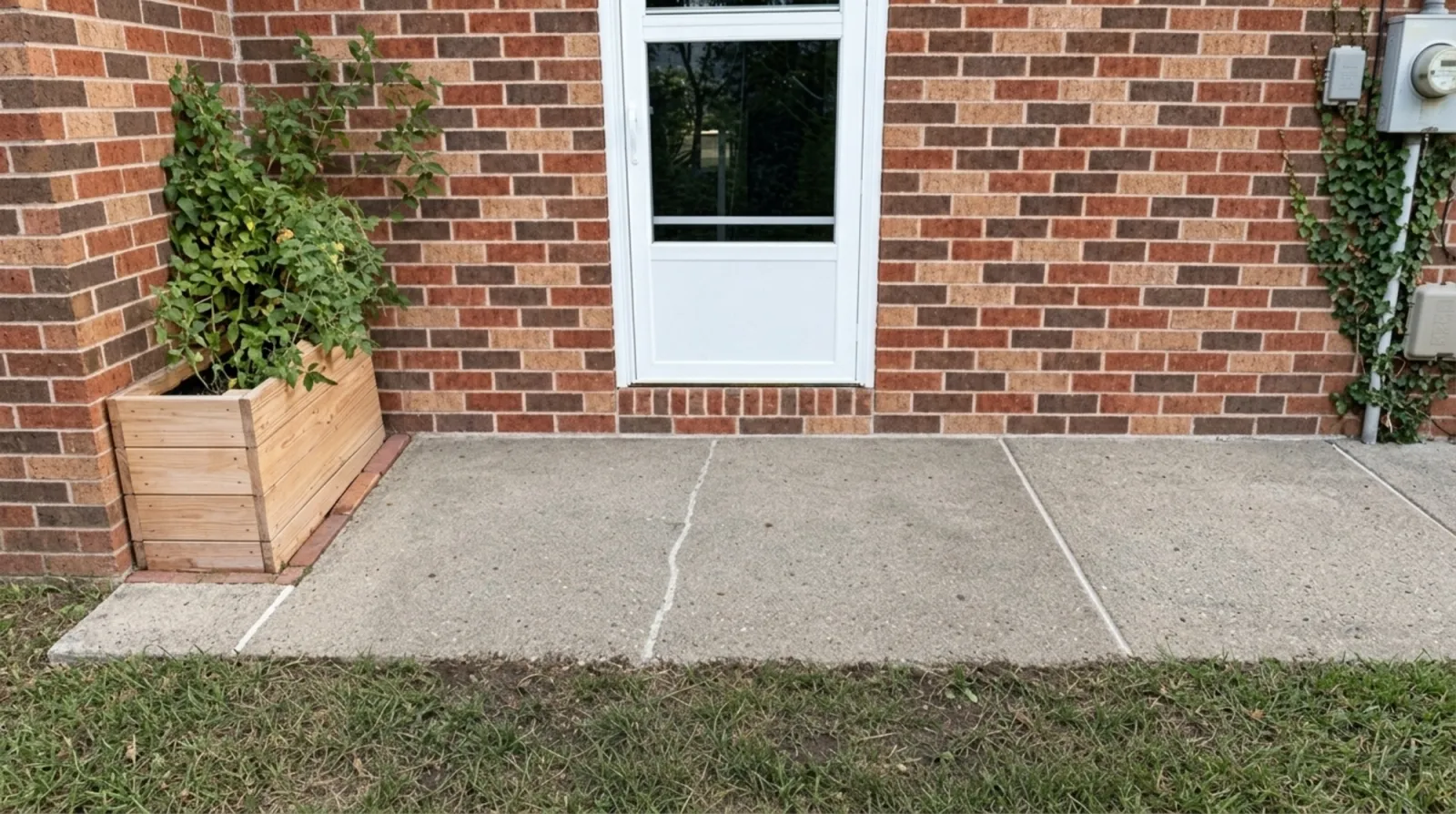
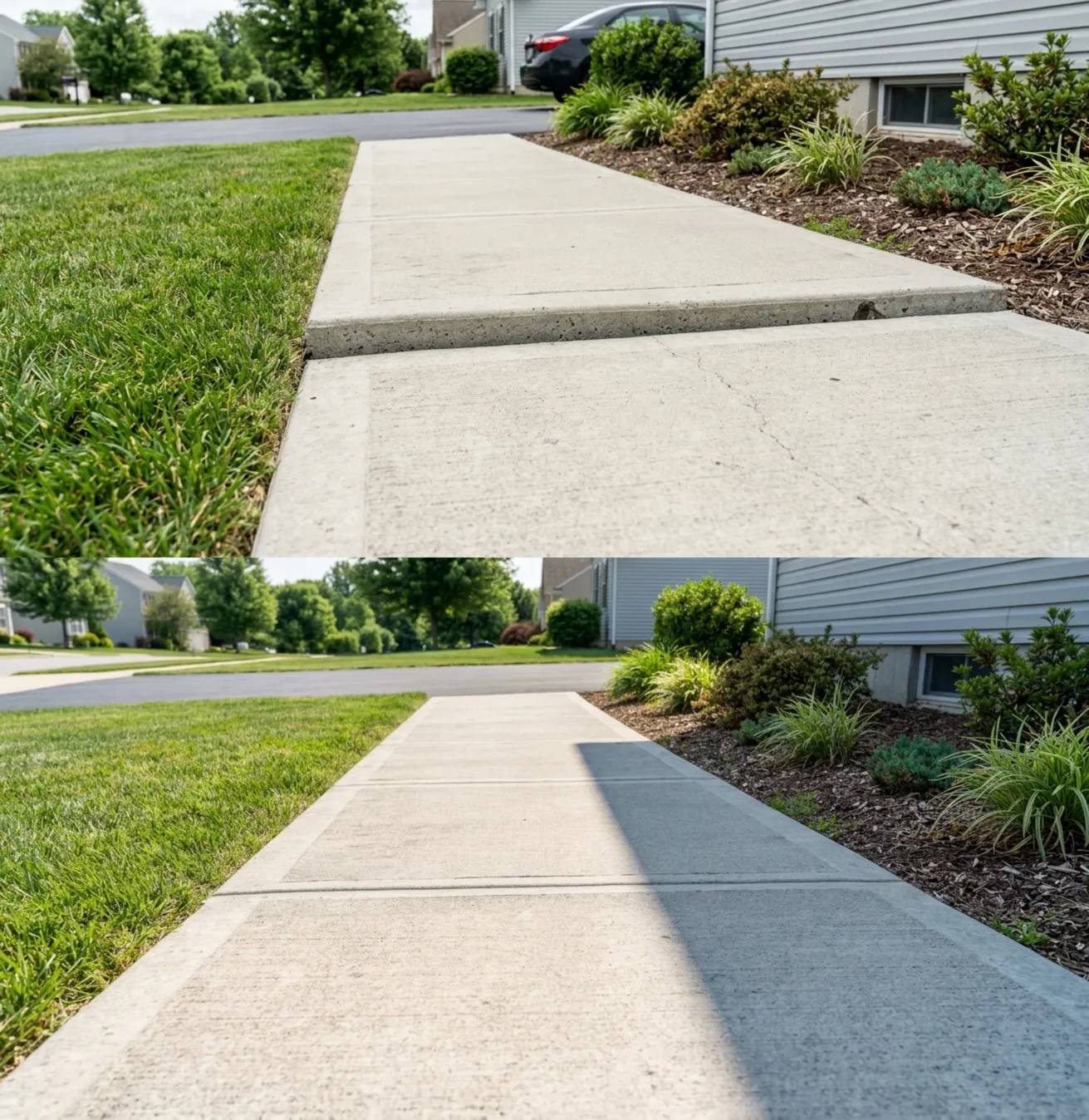
These signs can call for concrete leveling. A homeowner can see them on driveways, walkways, patios, garage floors, pool decks and other slabs. Each can mean soil has moved or washed out below the concrete, but only an inspection confirms the cause.
- One slab sits lower than the next. A step or lip at a joint is a trip hazard. The soil under the low side may have settled or washed away.
- A driveway or walkway slopes toward the house. Rain may now run toward the wall. The ground under the slab may have dropped.
- A gap between the slab and the house or garage. The slab may have sunk away from the wall. Water can get into the gap.
- Puddles on a slab that used to drain. A low spot may mean the soil below it has dropped.
- A hollow sound when you tap or drive over concrete. There may be an empty space under the slab.
- Cracks that run across a slab with one side lower. The slab may be breaking where the ground below it gave way.
- A garage floor, pool deck or outbuilding slab that has tilted. The soil under part of it may have moved.
- A dip or small sinkhole beside the slab. Water may be carrying soil away or a buried pipe may have failed. See drainage and water control.
If a crack also runs up a wall or doors stick, ask for a foundation inspection. A sunken slab and a settling house are not always the same problem.
Concrete Leveling in Augusta, GA: Foam, Slurry or Replacement
Concrete leveling lifts a slab instead of tearing it out. Contractors use two main fill materials, and some slabs are better replaced. Here is how they differ.
| Method | What it does | Fits when | Limits |
|---|---|---|---|
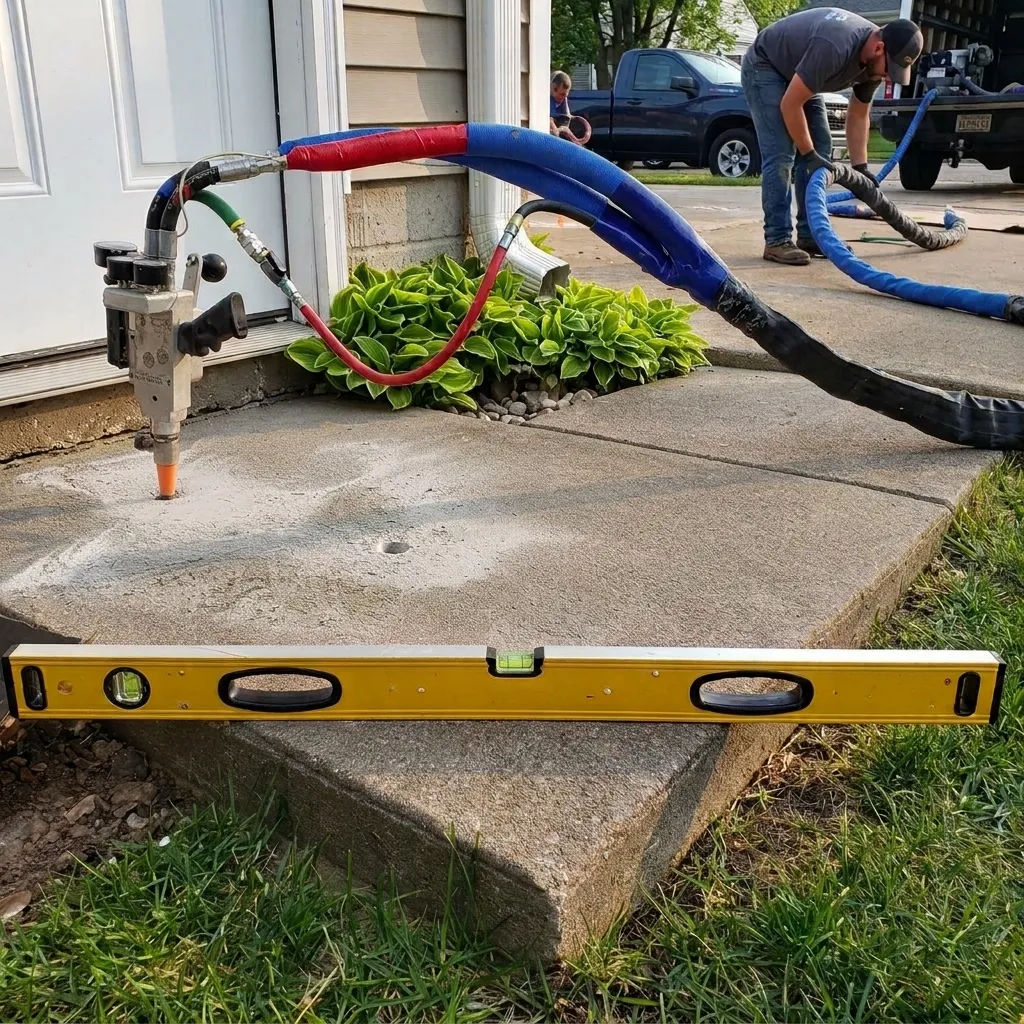
| Polyjacking (foam concrete leveling) | Injects expanding polyurethane foam through small holes to fill the gap and raise the slab | The slab is in one piece and the gap below it is the problem | Does not fix the cause of the ground loss. A poor mix or too much pressure can lift a slab unevenly |
| Mudjacking (slurry concrete leveling) | Pumps a cement-based slurry through larger holes under the slab | A heavy, flat slab such as a driveway needs lifting | The fill is heavier, so it adds more weight under the slab. The holes are larger |
| Replacement | Breaks out the slab, rebuilds the base and pours new concrete | The slab is badly broken, crumbling or too tilted to lift | Takes more work, and leaves a new slab over the same ground |
| Grinding or patching a trip edge | Smooths a small lip where two slabs meet | The lip is slight and the slab is still firm | Does not raise the slab or fill any gap underneath |
Five Steps from First Look to a Level Slab
- Look at the concrete and the ground. A contractor checks which slabs have dropped, how far, and where water runs. Cracks, gaps and soft spots help show what happened.
- Look for the reason it sank. Lost soil, roof water or a failed pipe can all leave a gap. Lifting the slab before fixing the cause may only be a short-term answer.
- Choose the leveling method. You get a written plan. It states whether foam, slurry or replacement fits each slab, and where any drainage work is needed.
- Lift the slab. The work is performed by licensed and insured contractors. They drill small holes, fill the gap below the slab in stages and watch the slab rise.
- Seal the holes and check the result. The holes are filled and the surface is cleaned up. Walk it, check the slope, and watch where water goes in the next rain.
What Moves the Price of Concrete Leveling
Concrete leveling is priced by the job. These things move the price:
- How many slabs need lifting and how large they are
- How far each slab has dropped
- The fill material chosen: foam or slurry
- How big the empty space under the slab is, which sets how much material it takes
- Whether the cause of the ground loss needs its own fix, such as drainage
- How easy it is to reach the slab with equipment, including a pool deck or fenced yard
- Whether some slabs are too broken to lift and need replacing
Ask for a free estimate and a licensed and insured contractor can look it over.
Sandy Ground, Lost Soil and Storm Water Around Augusta Slabs
- Homeowner account, July 2025. A WRDW news report (July 23, 2025) covers the Overton Road and Raes Creek area. One homeowner described a foot of ground loss in a decade and sinkholes. That is one resident's account, not a survey. Augusta's engineering head said clogged and aging storm drains cannot handle the flow.
- Soil survey, Richmond County. An NRCS soil survey sample (queried October 6, 2026) shows 9 of 25 land points on sand-dominant soils that are somewhat excessively to excessively drained. The survey also shows 6 of 25 points on frequently flooded floodplain soils. The survey data give no rate of slab or driveway settling.
- Troup soil series. NRCS describes the Troup series as having a sandy surface and being somewhat excessively drained (Official Series Description, opened October 6, 2026). The Georgia Encyclopedia article on the Sandhills (Schmidt, edited 2013) calls the Georgia sandhill sands highly permeable.
- Hephzibah sample. The NRCS soil survey sample for Hephzibah (queried October 6, 2026) shows 5 of 30 points as somewhat excessively drained and 4 as poorly drained with frequent flooding. A point is not a lot, so a slab-by-slab look still matters.
- Columbia County. The county's Environmental Management page (opened October 6, 2026) describes local flooding after heavy storms near Reed Creek, Betty's Branch and Jones Creek. It names flash flooding and land changed by development.
Concrete Leveling & Polyjacking Questions in Augusta, GA
What is the difference between mudjacking and polyjacking in Augusta?
Mudjacking pumps a cement-based slurry under a slab. Polyjacking injects foam through smaller holes. A licensed and insured contractor will look it over and give you a free estimate.
Should drainage be fixed before concrete leveling?
Often, yes. If water carries soil out from under a slab, concrete leveling may not last. The city's stormwater page says residents report street drain problems through Augusta 311, 706-821-2300.
Is a sunken driveway a sign my foundation has a problem?
Not always. A driveway may drop from soil loss under the slab alone. If you also see wall cracks or sticking doors, ask for an inspection, because only an inspection shows the cause.
Can concrete leveling lift a pool deck, patio, garage floor or shed slab?
Concrete leveling can often raise flat surfaces, including driveways, sidewalks, patios, garage floors, pool decks and outbuilding or commercial slabs. A badly broken slab may need replacing instead. The work is performed by licensed and insured contractors.
Does sandy ground in Augusta mean my slab will sink?
Not by itself. The soil survey shows sandy, fast-draining soils at some Richmond County points and wet creek bottoms at others. It gives no rate of slab settling, so each slab needs its own look.
Contact Us Today for a Free Estimate
Sunken concrete can be a trip hazard and can send water toward the house. The work is performed by licensed and insured contractors. Call or ask online for a free concrete leveling estimate.