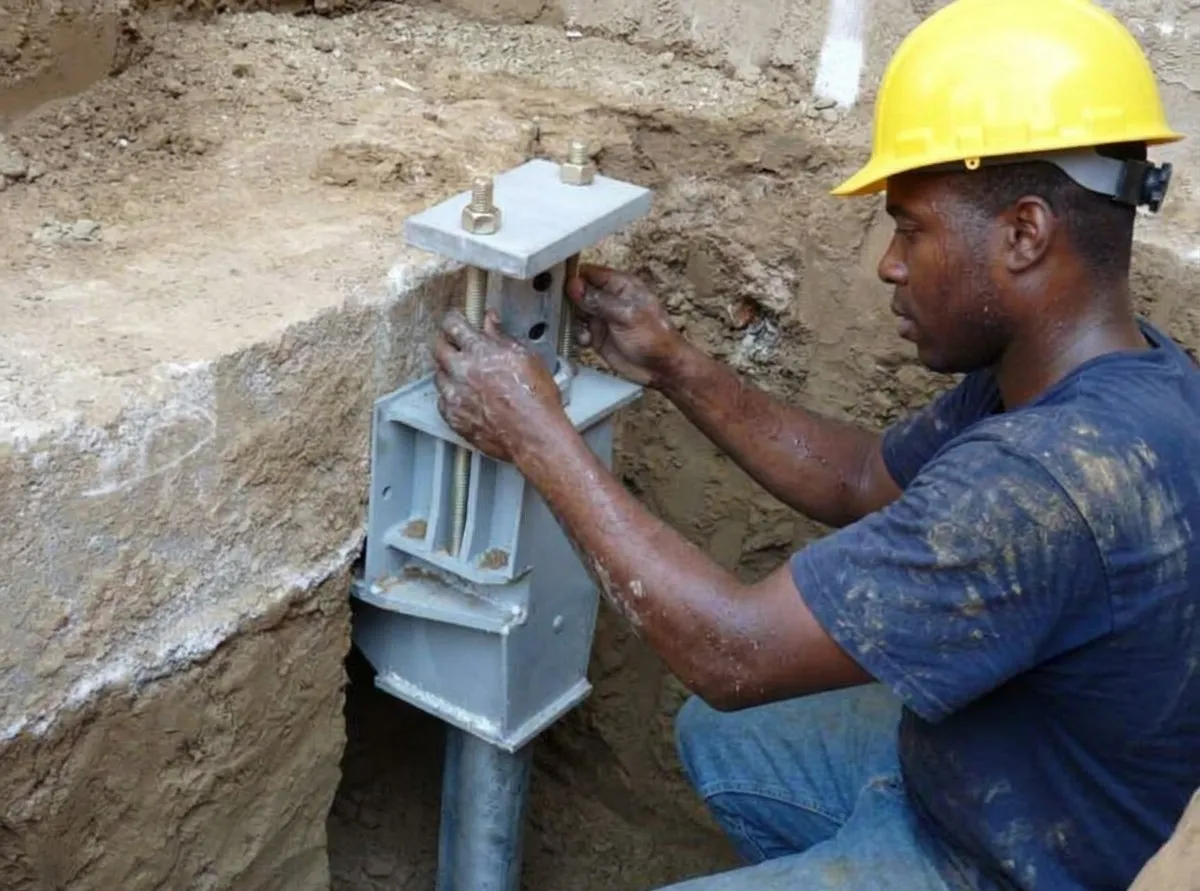
Foundation Repair & Piering
Foundation Repair & Piering in Augusta, GA
Foundation repair in Augusta starts with water. Piers can carry a house on firmer ground once the cause is known.
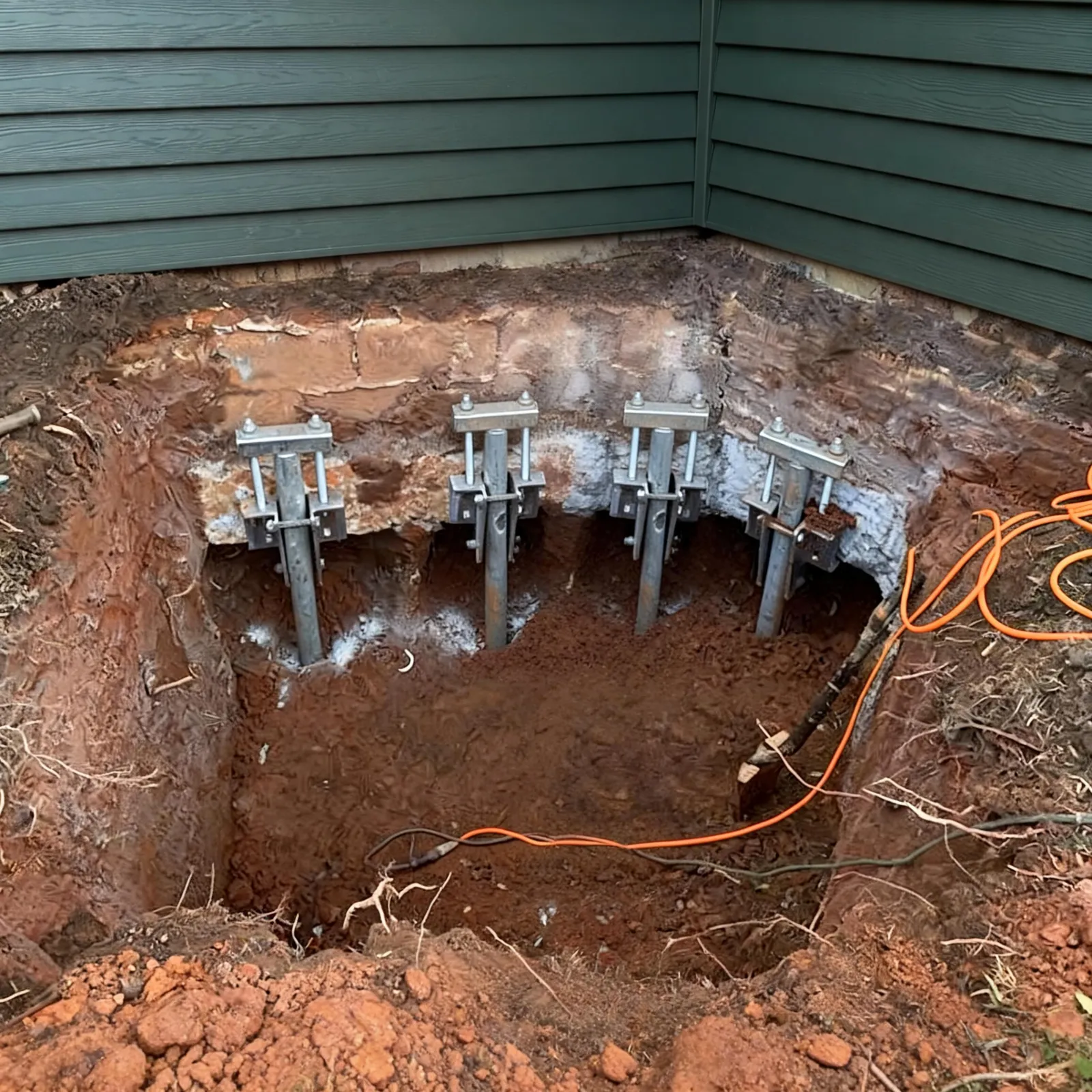
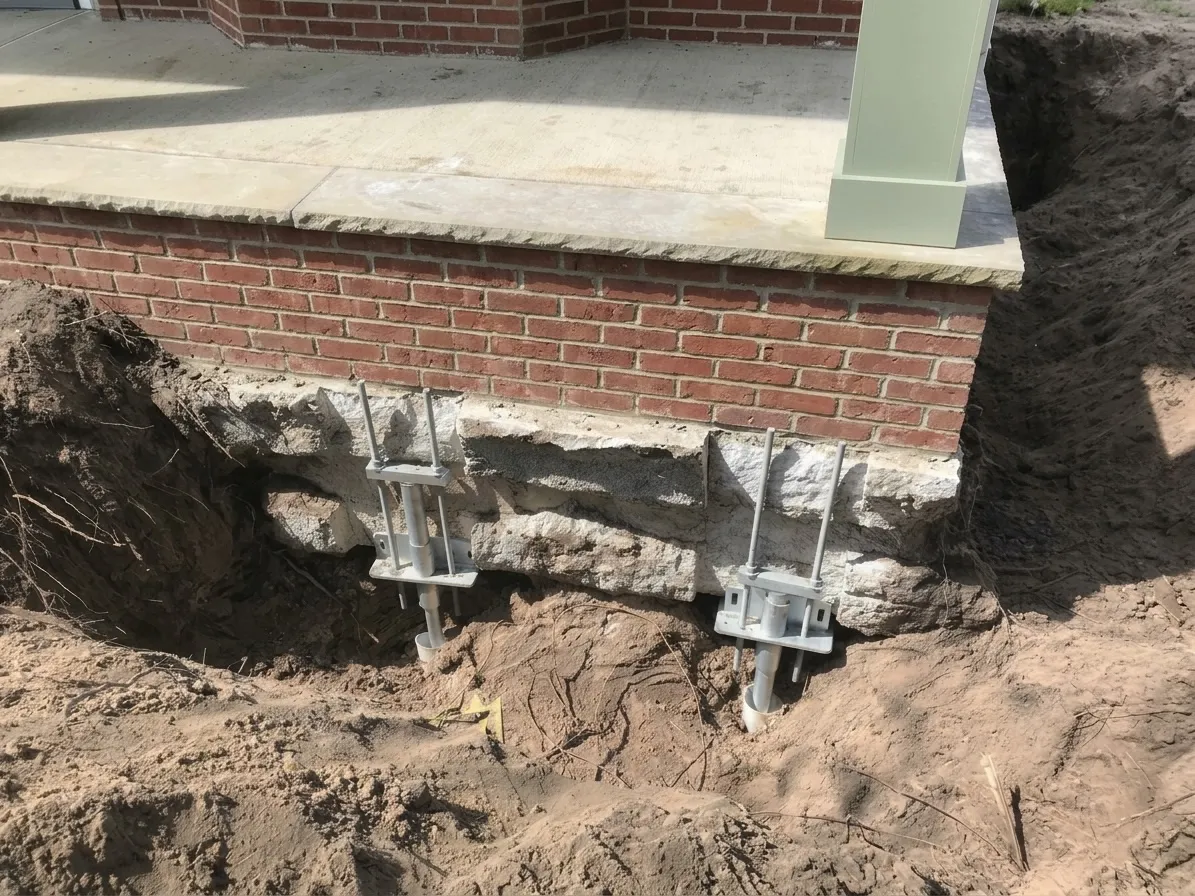
What Cracks, Sticking Doors and Sloping Floors Can Mean
These are things a homeowner can see. Each can point to movement, but only an inspection confirms the cause.
- Cracks that are wider at one end, or stair-step cracks in brick or block. One part of the house may have moved more than the rest. Some hairline cracks are only cosmetic.
- Doors and windows that stick or no longer latch. The frame may be out of square because the wall above has shifted.
- Floors that slope or feel soft in one area. A footing may have dropped, or the framing under the floor may have a separate problem.
- Gaps between a wall and the ceiling, or a porch or chimney pulling away from the house. Different parts of the structure may be moving at different rates.
- Brick that cracks at window corners or looks pushed out. This can come from movement below, or from water behind the brick.
- Bare, washed-out soil or a small hole beside the foundation. Running water may be carrying soil away from the footing, or a buried pipe may have failed.
- A step, porch slab or garage floor that has dropped. The ground under it may have settled. See concrete leveling and polyjacking for slabs.
Not sure what you are looking at? A foundation inspection and structural evaluation comes before any repair plan.
Foundation Repair in Augusta, GA: Piers and Other Fixes Compared
Foundation repair is more than piers. The right fix depends on what the inspection finds under the house.
| Option | What it does | Fits when | Limits |
|---|---|---|---|
| Drainage fix first | Moves water away so soil stops washing out | Water, not weak ground, is the cause, and the house has moved only a little | Does not lift or stabilize a house that has already dropped |
| Push pier | A steel tube driven down under the footing until it meets firm ground, then used to hold or lift the house | The upper ground may be weak or filled, and firmer ground lies below | Needs enough weight on the footing to drive it. Access has to allow the equipment |
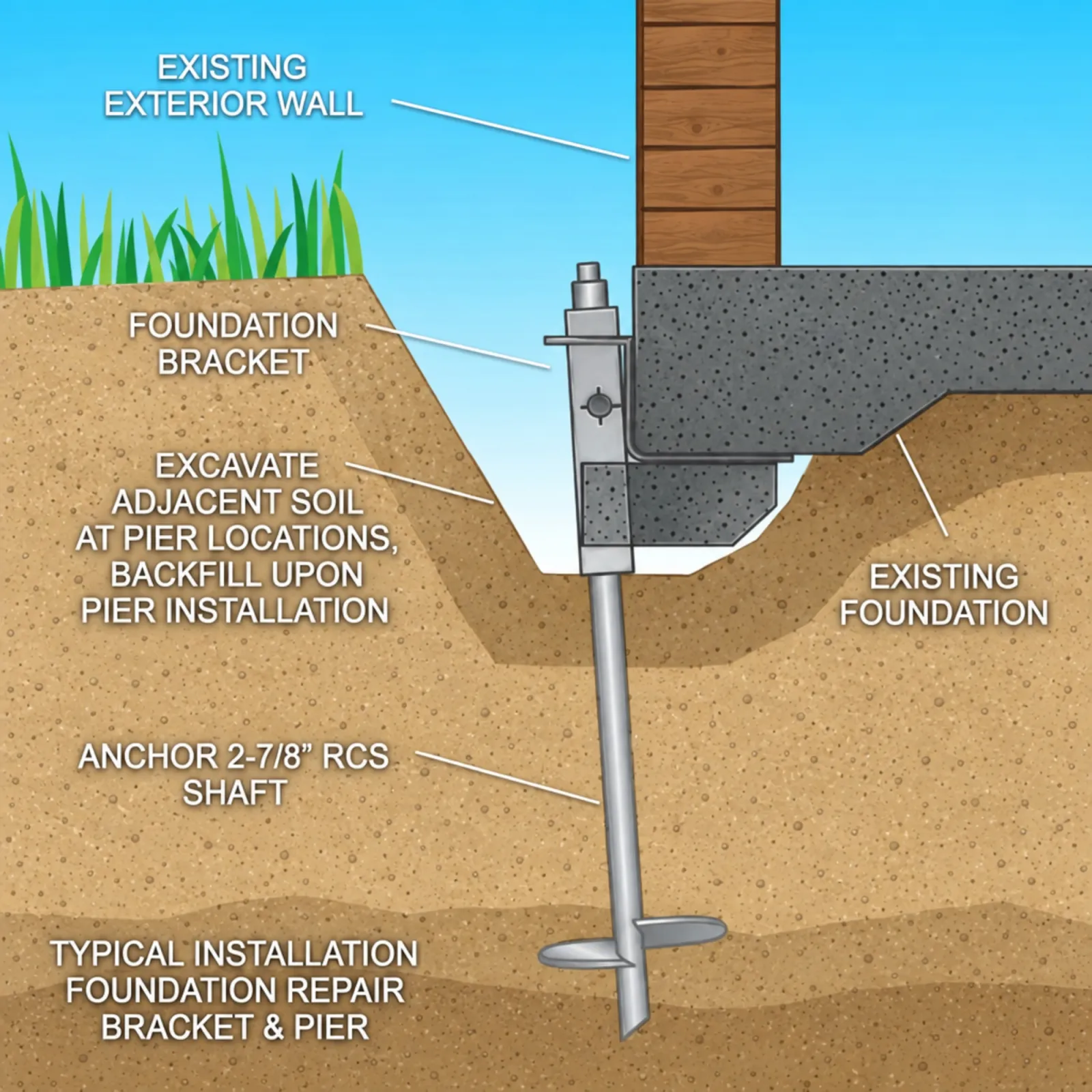
| Helical pier | A steel shaft with screw plates turned into the ground, then tied to the footing | Light loads, porches and additions, or places where a driven pier would not hold | Needs a contractor to match the plates to the soil. Not every site suits it |
| Slab pier | A steel bracket and pier set under a slab-edge or interior slab | A slab house, garage or addition has settled | Does not fix the water that moved the soil |
| Watch and measure | Marks and readings show whether a crack is still moving | A small crack, with no sign the house is still shifting | Gives no repair. Movement can continue if the cause stays |
Steps in a Typical Pier Job
- Look at the whole house. A contractor walks the outside and the inside. They note cracks, slopes, gutters, grading and any place water collects.
- Find the cause. The goal is to learn whether water, fill or weak ground may have moved the house. Only an inspection shows this.
- Fix the water. If roof or yard water is reaching the footing, that is dealt with so repairs are not undone. See drainage and water control.
- Set the piers. Where the footing needs support in a foundation repair, piers are placed under it and tied in. The contractor explains which kind fits and why.
- Check and follow up. The contractor checks the work, and you can ask what to watch for. Doors, cracks and floors tell the story over time.
What Changes the Cost of Piering
Foundation repair is priced by the job. These things move the price:
- How many piers the footing needs and how far apart
- Which pier type fits the ground and the load
- How deep firm ground lies under the house
- How easy it is to reach the work area with equipment
- Whether the house is to be lifted, or only held where it is
- Whether drainage work, gutters or grading must be done first
- What has to be restored afterward, such as landscaping, paving or flooring
- Whether an engineer's report is wanted
Other cost guides give ranges on our foundation repair cost page. A licensed and insured contractor will look it over and give you a free estimate.
Older Homes, Wet Bottoms and Sandy Ground Around Augusta
- Soil survey, Richmond County: an NRCS Soil Data Access sample (queried October 6, 2026) of 25 land points shows low shrink-swell at 24 and moderate at one. It also shows 6 points on frequently flooded floodplain soils.
- Soil survey, other places: the same survey (queried October 6, 2026) rates all 20 sampled Columbia County points low. At Martinez, 31 of 37 points rate low and 6 high. One lot can differ from the next.
- Home age: Census ACS 2024 estimates put about 60% of Richmond County homes as built before 1990, and about 30% in Columbia County. Age alone does not show a foundation problem.
- One homeowner's account: a WRDW news report of July 23, 2025, quotes one Overton Road homeowner on a foot of ground loss in a decade and sinkholes. It is one account, not a survey.
Foundation Repair & Piering Questions in Augusta, GA
The soil here swells and shrinks very little. Does that mean my house cannot settle?
No. The survey is a sample of points, not your lot, and movement can also come from water carrying soil away, from fill, or from weak ground. Only an inspection shows which applies to your house.
Is a house built in the 1970s or 1980s old enough to need foundation repair?
Age alone does not show a problem. Census estimates put about half of Richmond County homes as built before 1980. An older house has simply had more years of weather, so a look at cracks and drainage is a sensible check.
Should drainage be fixed before piers go in?
Often, yes. In foundation repair, piers hold a footing up but do not move water, so the problem can return if water keeps washing soil away. A contractor can tell you which comes first.
Can foundation repair with piers be done near a creek bottom?
Possibly. The soil survey shows frequently flooded floodplain soils at some Richmond County points, and wet ground changes the plan. A contractor can look it over before any pier type is chosen.
Will foundation repair lift my house back to where it was?
Sometimes piers can lift part of the movement, but not always. Old cracks and stuck doors may not close fully. The contractor can explain what is likely for your house at the estimate.
Contact Us Today for a Free Estimate
Cracks, sticking doors or sloping floors are worth having inspected, and foundation repair starts with an inspection. The work is performed by licensed and insured contractors. Call or ask online for a free estimate.